
Ant Control
Carpenter Ants vs Termites: How to Tell Them Apart
By Jobe Pest Services LLC · Published October 18, 2026 · Updated November 3, 2026
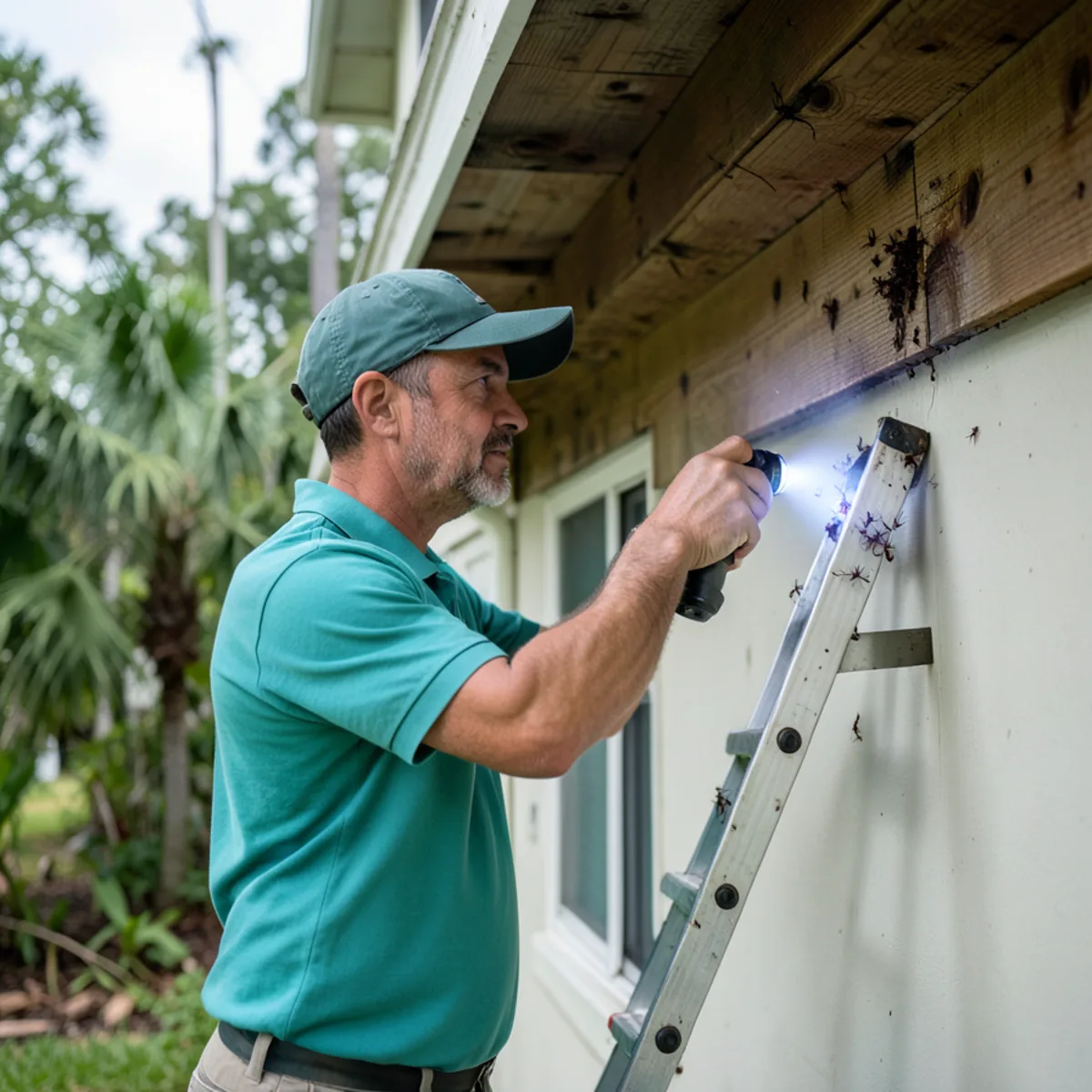
Large dark insects around wood, or winged ones swarming near a window, send a lot of Florida homeowners into a panic about termites. Often it’s carpenter ants, which are a different problem with a different fix. Telling them apart matters.
Here are the quick differences, and why they change what you do next.
The quick visual differences
Ants, including carpenter ants, have a pinched, narrow waist, bent (elbowed) antennae, and — when winged — front wings longer than the back pair. Termites have a straight, broad waist with no pinch, straight antennae, and four wings all the same length that break off easily. If you find a pile of shed wings all the same size, that points to termites; coarse sawdust-like shavings point to carpenter ants.
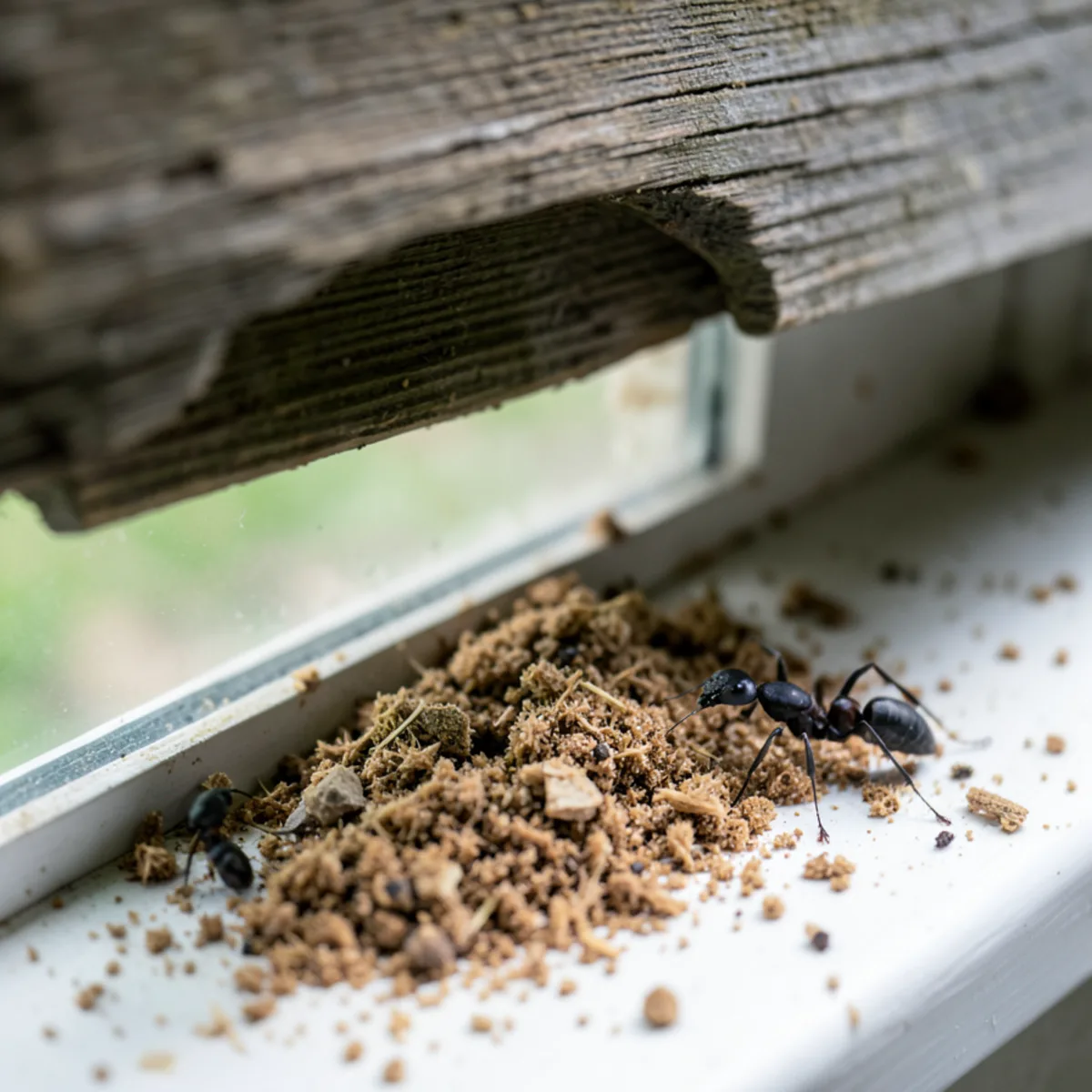
Carpenter ants also leave "frass" that looks like coarse sawdust with insect parts, pushed out of their galleries. Termites leave mud tubes (subterranean) or small hard pellets (drywood) instead.
Why it changes the treatment
Carpenter ants don’t eat wood — they hollow out damp or damaged wood to nest, so control means finding the nest and the moisture feeding it and treating both. Termites eat wood and are a structural matter handled differently.
This is one reason correct identification matters before anyone treats. If it turns out to be carpenter ants, we locate and treat the nest and address the moisture; if you suspect termites, that’s a separate wood-destroying-organism inspection.
Where carpenter ants nest in Florida homes
Carpenter ants gravitate toward wood that water has already softened, so the nests turn up in predictable trouble spots. Think of the wood around a leaking window frame, the soggy sill beneath a shower, the framing behind a dripping gutter, or a damp attic rafter under a roof leak. In our humid climate these moist zones are common, and a satellite nest can sit indoors while the parent colony lives in a dying tree or stump out in the yard, the two linked by a steady line of foragers.
Unlike the tiny kitchen ants people usually picture, these are large and dark, often a quarter to half an inch long, and strong enough to move through weakened framing with ease. Finding them indoors is less about crumbs on the counter and more about following them to the moisture that drew them. Where the trail disappears into a wall void or door frame, that damp cavity is usually the nest or a path straight to it.
Moisture-prone spots worth inspecting
Because damp wood is what invites them, a walk around the house looking for water damage finds carpenter ant risk before the ants announce themselves.
- Window and door frames where old caulk has failed
- Wood trim beneath leaking gutters and downspouts
- Sills and subflooring around tubs, showers and dishwashers
- Attic rafters and sheathing under a roof leak
- Porch columns, deck posts and fence rails touching damp soil
- Tree stumps, dying limbs and firewood stacked near the wall
How to catch them foraging at night
Carpenter ants do most of their hunting after dark, which is why a homeowner may see very few during the day and assume the problem is small. Stepping into the kitchen late at night and switching on the light often reveals a trail crossing the counter or baseboard that was invisible at noon. They forage for sweets and protein well away from the nest, sometimes traveling along utility lines, branches or wires that touch the house, so the ants you see indoors may be nesting some distance away.
A faint rustling inside a wall after dark, or a scattering of gritty debris beneath a baseboard, often accompanies an active indoor nest. Because these ants carve galleries rather than feed on the timber, the excavated material collects below the opening instead of being eaten away. That simple contrast — wood hollowed and discarded versus wood consumed — is the clearest behavioral line between a carpenter ant colony and the pest people fear most.
Swarming season and the winged stage
Both carpenter ants and the wood-eating insects produce winged reproductives that leave the nest to start new colonies, and seeing a swarm indoors is often the first clue a mature colony is living inside the structure. In Florida, carpenter ant swarmers tend to appear in the warmer, wetter months, fluttering toward windows and light fixtures. A pile of large winged ants on a sill, rather than a few strays, suggests the colony has matured enough to reproduce — and that it has been established longer than you might expect.
This is the moment identification matters most, because a swarm of winged insects at the window is exactly what sends people into a panic. Checking the waist, the antennae and the wing lengths on a single specimen settles it quickly. If every wing on the pile is the same length and the bodies lack a pinched middle, that points away from ants entirely and toward a wood-destroying organism that calls for a different kind of look at the structure.
Fixing the moisture that invited them
Because carpenter ants chase damp wood, lasting relief comes from drying out whatever softened it in the first place. Clearing clogged gutters, redirecting downspouts away from the slab, resealing failed window and door caulk, and repairing roof and plumbing leaks all take away the conditions the colony depends on. Replacing wood that has already gone spongy removes the nest site itself. Treat the ants without correcting the water and a fresh colony tends to move into the same soft timber later on.
Keeping the structure dry also means minding the landscape. Branches resting on the roof, shrubs crowding the siding and firewood stacked against the wall all give foragers a sheltered, humid bridge indoors. Pruning those back and moving the woodpile well off the house takes away both the pathway and the backyard harborage that often hides the parent colony.
Telling carpenter ants from other big ants
Not every large dark ant in the kitchen is a carpenter ant. Florida yards host several sizable species, and a few stray foragers from the garden can look alarming without meaning a nest is in your walls. Carpenter ants stand out for their evenly rounded profile seen from the side, a single node at the waist, and a heart-shaped head on the larger workers. Their strong preference for damp, damaged wood is the behavioral giveaway that separates a genuine indoor nest from an outdoor wanderer that simply blundered inside.
Trailing a line of them back to its source settles the question. If the path leads to a tree, stump or mulch bed and the ants are only passing through, the fix is sealing entry points and trimming the yard. If it vanishes into a window frame, wall void or damp sill, you are likely looking at an indoor colony that needs the nest and the moisture addressed together.
When to schedule a termite inspection
If the clues point to wood that is being eaten rather than hollowed — mud tubes climbing a foundation wall, small hard pellets beneath trim, or wings that are all one length — it is time for a proper wood-destroying-organism inspection rather than an ant treatment. The two problems look alike from across a room but demand very different responses, and guessing wrong wastes time while damage continues. An inspector can read the galleries, the debris and the surrounding moisture to name the culprit with confidence.
Our focus with these calls is identifying what you actually have and treating carpenter ants and their moisture source when that is the answer. Where the signs instead point to termites, that falls outside ant work and belongs to a dedicated inspection — so the honest first step is always confirming the species before anyone reaches for a treatment.
Related on this site
Sources
- UF/IFAS Extension — carpenter ants and wood-destroying insects