
Ant Control
Fire Ant Mounds After Rain: Protect Your Yard
By Jobe Pest Services LLC · Published October 19, 2026 · Updated November 3, 2026

A burst of fresh fire ant mounds in the days after a summer storm is a familiar sight around Wimauma. The rain doesn’t create the ants — it pushes an existing colony to the surface. Knowing why helps you handle it safely.
Here’s what’s happening and how to protect walkways and play areas.
Why storms bring the mounds up
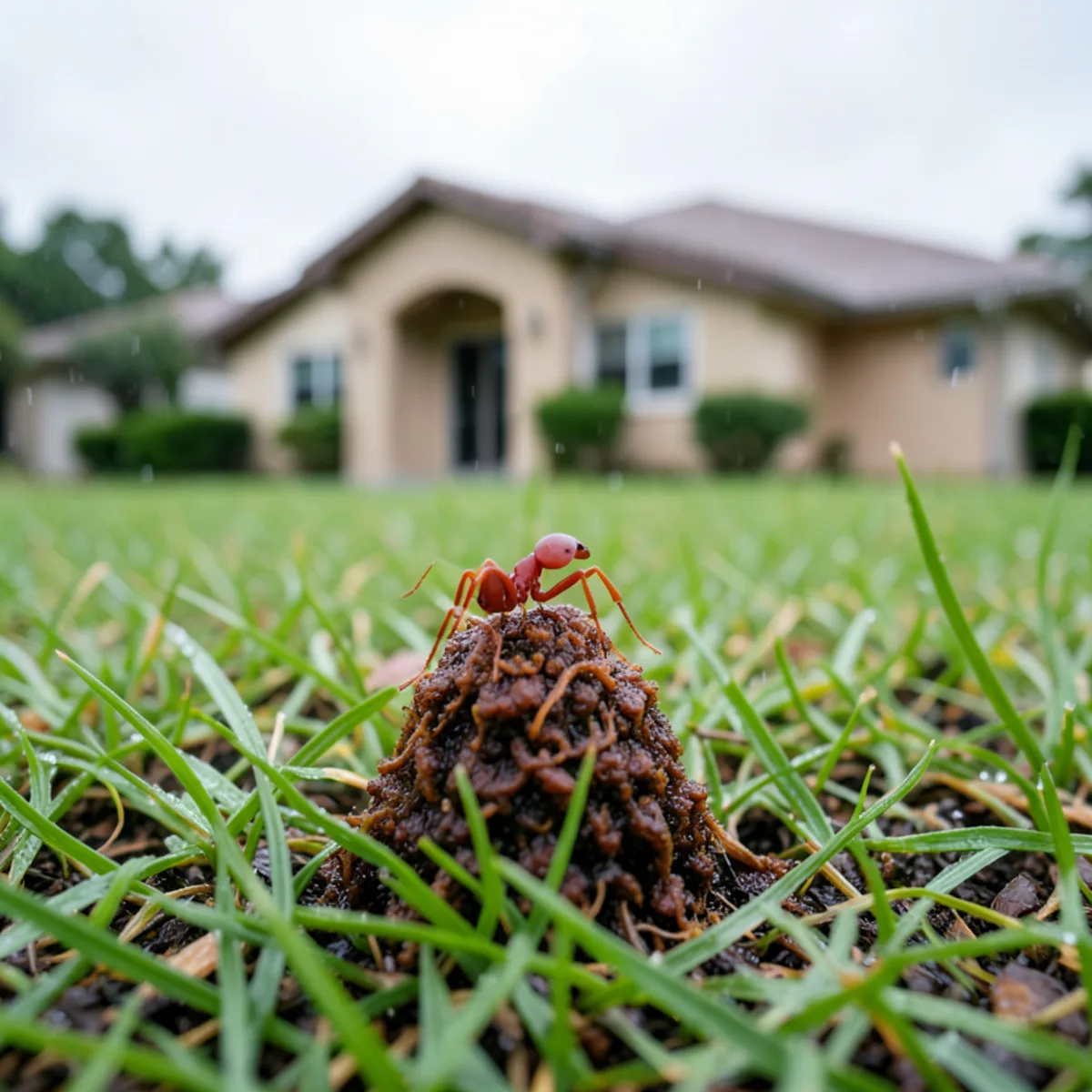
Fire ants live in extensive underground tunnels. When heavy rain floods those tunnels, the colony moves up to higher, drier ground and throws up visible mounds — so you see a wave of new mounds after a storm even though the colonies were there all along. In extreme flooding, fire ants can even form floating rafts to survive.
That’s why spot-treating one mound rarely ends the problem: the colony relocates, and neighboring colonies recolonize from surrounding land.
What to do — and not do
Don’t kick, flood or disturb a mound — that scatters the colony and triggers stinging. Keep children and pets away from active mounds, especially near walkways, patios and play areas where stings are most likely. Store-bought mound drenches kill the surface ants but often miss the queen, so mounds return.
For lasting control, a twice-a-year prevention approach treats the yard so new mounds don’t establish, with spot treatment for any that pop up between visits. That’s the schedule we use on fire-ant-prone South Shore lots.
Knowing a fire ant mound on sight
A fire ant mound has no obvious entrance hole on top, which sets it apart from the native ant hills people are used to. Instead it looks like a loose dome of fluffy, worked soil, often a foot or so across, that seems to appear overnight on a sunny patch of lawn, along a driveway edge or beside a fence post. Disturb it and the reaction is instant: hundreds of reddish-brown ants boil to the surface and swarm upward, ready to defend the colony with a coordinated, aggressive response.
The ants themselves are small and range from copper-brown to nearly black, but it is the behavior that confirms them. Native Florida ants scatter and flee when their nest is bumped, while fire ants rush out and climb anything within reach before they sting. That difference in temperament is the quickest field test, and it is also why nobody should lean in for a close look at a mound to make the call.
Where the mounds tend to pop up
After a soaking rain the colonies push to the surface in fairly predictable places, so a quick sweep of these spots finds fresh mounds before someone stumbles onto one.
- Open, sunny stretches of lawn away from shade
- Along driveways, sidewalks and patio edges that hold warmth
- Beside fence posts, utility boxes and irrigation valve covers
- Garden beds, around young trees and under low ground cover
- Low, moist areas that drain slowly after a storm
Why fire ant stings hit so hard
A fire ant sting is unmistakable: the ant grips the skin with its jaws, then pivots to drive its stinger in repeatedly, so a single ant can leave a cluster of welts. Within a day most stings raise an itchy, fluid-filled blister that can linger for a week. Because the ants swarm and sting in unison, brushing against a mound rarely ends with just one mark. For most people it is painful and irritating, but for anyone with a sting allergy the reaction can be far more serious.
That medical angle is the real reason these ants matter around a home. Children playing barefoot, pets nosing through the grass and anyone gardening are the most likely to be caught, and the stings cluster fast once the colony is alarmed. Treating the yard as a whole, rather than waiting to react to each painful encounter, is what keeps the family and the animals out of harm.
What to do if someone is stung
If the stings happen, move away from the mound first so no more ants pile on, then brush the attackers off by hand or cloth rather than swatting, which can prompt more to grip and sting. Wash the area with soap and water, apply a cold compress to ease the burn and swelling, and try to leave the blisters intact to avoid infection. Over-the-counter remedies can calm the itch while the welts settle over the following days.
Watch for anything beyond local swelling. Signs such as widespread hives, trouble breathing, dizziness or swelling of the face and throat point to a serious allergic reaction and call for emergency medical help right away. Sorting out which household members react strongly to stings is worth doing before anyone is caught off guard in the yard.
Why baiting beats drenching a single mound
Pouring a store-bought drench over a visible mound kills the workers on the surface but seldom reaches the queen buried deep below, so the colony simply rebuilds or relocates a short distance away. A broadcast bait works differently: foragers carry the material down into the nest and feed it to the queen and brood, collapsing the colony from within. The trade-off is patience, since bait acts over days to weeks rather than minutes, but it reaches the part of the colony a drench misses.
Timing helps the bait do its job. Fire ants forage most actively when the ground is warm but not baking, so mild mornings and the stretch after a rain has drained are ideal, while midday heat and soggy soil keep them underground. Scattering bait when the colony is out looking for food gives the workers the greatest chance to find it and ferry it home.
When fire ant pressure peaks here
Around the South Shore, fire ants stay active through most of the year but surge in the warm, wet stretch from late spring into early fall, when storm after storm floods their tunnels and sends mound after mound to the surface. New colonies also take hold after the mating flights that follow warm, humid weather, so a yard can gain fresh mounds even in a spot that was clear a month earlier. That steady renewal is why one-off treatments lose ground so quickly.
A planned approach that treats the whole yard ahead of the heaviest season, then spot-treats the stragglers that appear between visits, holds the pressure down far better than reacting to each mound. Pairing that with the habit of scanning the lawn after every big storm catches new mounds while they are small and easy to deal with.
Keeping play areas and walkways clear
The spots where people spend the most time deserve the most attention, because that is where a surprise mound does the most harm. Around swing sets, sandboxes, patios, mailboxes and the paths children take to the bus stop, a mound can go unnoticed until a bare foot lands on it. Keeping grass trimmed and the ground free of debris makes new mounds easier to see, and folding these high-traffic zones into the regular treatment routine lowers the odds of a painful run-in.
It also helps to teach children to recognize and avoid mounds and to wear shoes in the yard through the wet months. A mound near a doorway, a frequently used gate or the edge of a play area should move to the top of the list, since those are the places where an accidental disturbance brings the fastest, most crowded response.
Related on this site
Sources
- UF/IFAS Extension — imported fire ant management